Binster Bt 185 is a practical option for buyers evaluating a compact security/monitoring solution for everyday premises. This guide explains what the keyword typically refers to in commerce and installation contexts, outlines how to assess compatibility, and highlights selection factors such as build quality, power needs, mounting approach, and documentation—grounded in objective supplier and industry practice.
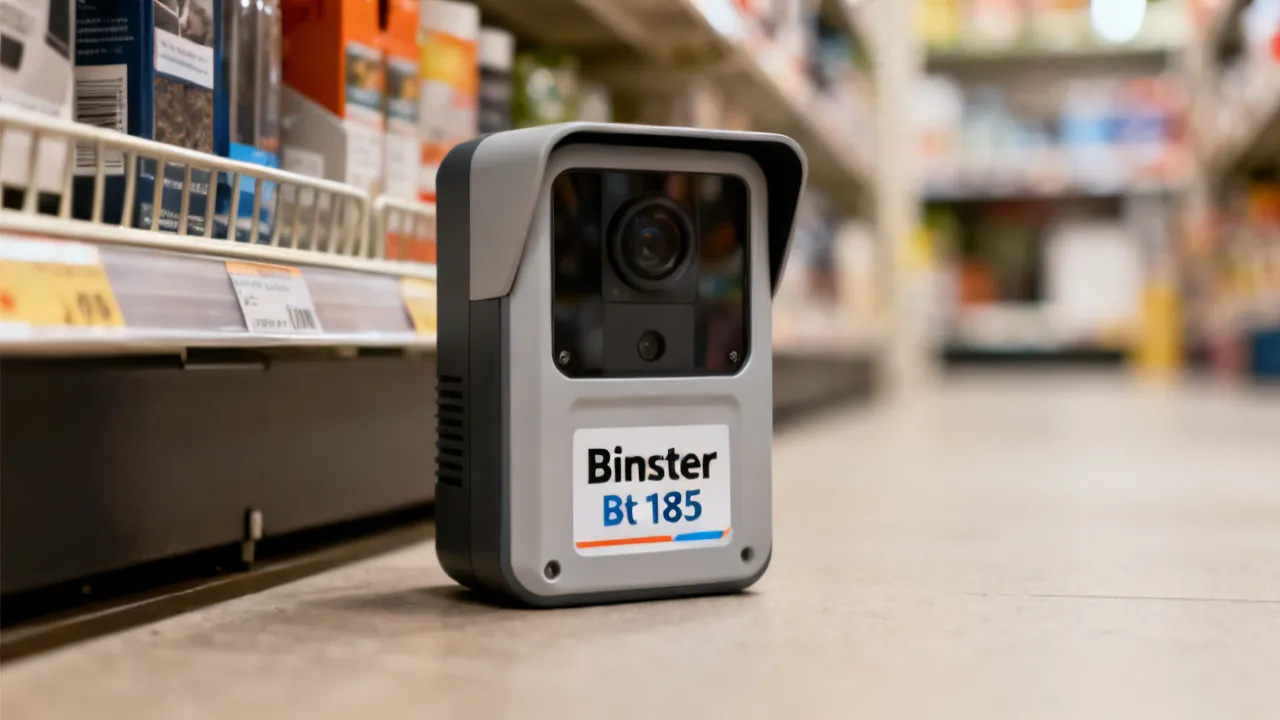
When you evaluate Binster Bt 185, treat it as a system component you will likely integrate into an existing setup—rather than as a standalone “plug-and-hope” item. Start by confirming the exact model designation, power and connection requirements, mounting or enclosure fit, and supplier documentation before comparing features. This approach reduces installation delays and helps you avoid mismatches between the device, your environment, and the intended monitoring workflow.
Because model strings in product families often correlate with multiple internal revisions, the most reliable procurement habit is to validate the unit you receive against the paperwork and labeling you are given. That means you should not rely solely on what a listing title says. Instead, cross-check the model code on the actual packaging, the label on the hardware, and the revision/variant information shown in the manual or installation guide. When those three sources agree, you can be more confident that the device will behave as expected when installed.
Additionally, adopt a “requirements first” mindset. Many buyer problems occur because procurement happens first (“buy the device”), then engineering is asked to make it work afterward (“connect it somehow”). For Binster Bt 185, your best buying outcome comes from capturing the installation constraints early: where it will be mounted, how it will be powered, how cables will be routed, what network or signal pathway it needs to integrate with (if applicable), and how alerts or events must be handled.
If the device is part of a monitoring workflow, you should also plan the receiving side before the device arrives. For example, if the unit communicates an alarm or status output to another system, you need to confirm compatibility with that system’s expected input type, voltage levels, wiring scheme, and configuration assumptions. Otherwise, you may purchase the right device but still spend time and money correcting the interface in the field.
In buyer conversations and supplier catalogs, Binster Bt 185 functions as an identifying string that helps distinguish one product variant from another. In practical procurement terms, model codes are used to specify internal revisions, casing types, connectivity options, and supported accessories. Because model naming can vary across regions or resellers, the safest method is to align the code on the packaging and manual with the code shown in the supplier’s technical documents.
Procurement teams frequently encounter situations where a model name appears consistent in a search bar, yet the delivered product differs. This can happen because of packaging changes, bundle changes (different kits included), or minor revision differences that are still “the same model” at a superficial level. For that reason, when someone quotes Binster Bt 185, you should ask explicit questions such as:
These questions sound basic, but they drastically reduce rework and delays. In many deployments, the “real cost” is not the purchase price—it is the time spent troubleshooting an integration after installation has already begun.
From an industry perspective, purchasing decisions go wrong when buyers prioritize a single advertised capability (for example, a headline “range” or “coverage” claim) while neglecting how the unit behaves inside its operational context. For a device identified as Binster Bt 185, compatibility depends on:
To expand this view, consider that “compatibility” is not one-dimensional. It includes mechanical compatibility (mounting and enclosure fit), electrical compatibility (power, wiring, signal levels), environmental compatibility (operating conditions), and operational compatibility (how it fits the way your site manages alarms and maintenance).
For instance, even if two units are similar in power requirements, their connectors and wiring practices may differ. One may use a specific adapter, while another expects terminal wiring with a recommended cable gauge. If you purchase based only on a broad power label, you can still end up with an installation that is unsafe or unreliable. In security and monitoring contexts, reliability is a core requirement—so “the device turns on” is not the same as “the device will operate correctly for years under real conditions.”
Use the checklist below to evaluate fit. Consider each point as a “gate” you must pass before ordering.
Ask the supplier for the product’s full model name, version (if applicable), and what’s included in the box. Two items may share “Binster Bt 185” in casual speech but differ by bundle content, cable type, or firmware baseline. Ensure the unit you receive matches the manual revision provided by the seller.
When you confirm the variant, do not stop at the product code alone. Ask for the included documents and kits list. For example, some suppliers ship:
If your project schedule assumes the cable harness and mounting kit are included, but they arrive separately, installation time will likely expand. This affects not only labor cost but also the risk of incorrect substitutions by installers in the field. Therefore, “what’s included” is not a small detail—it is part of procurement accuracy.
For any integrated device, the biggest hidden risks are incorrect voltage assumptions and unclear connection methods. Request the recommended power input specs and verify whether your installation uses a stable supply. If the product relies on adapters, confirm connector type and polarity. If it uses terminals, verify termination method and recommended cable gauge for safe installation practices.
In practice, power compatibility issues often show up as intermittent faults. A supply that is “close enough” on a bench may fail under site conditions where line drops, long cable runs, or electrical noise are present. If Binster Bt 185 is installed in a location with industrial machinery nearby, you may need to consider line conditioning, grounding strategy, and cable shielding recommendations—again, all of which should be addressed by the manufacturer or authorized documentation.
It’s also wise to confirm:
Even if your electrical team handles wiring, you should still request the manufacturer’s guidance so your installation aligns with their safety and reliability assumptions.
Even when the electronics are correct, poor installation fit can degrade performance and reliability. For Binster Bt 185, confirm whether the enclosure is designed for the intended mounting surface. Check clearance around openings, the method for routing cables, and whether fasteners or mounting plates are included.
Mounting fit is not only a mechanical convenience issue. It also influences environmental sealing, cable strain relief, and tamper exposure. If the device is mounted in a location where it can be bumped or where cables can be pulled, the mounting method and strain relief details matter. Buyers should verify whether the installation guide specifies:
Where mounting includes protective covers or tamper-resistant fasteners, you should also check whether those items are included in the kit or must be ordered separately. A “missing small part” scenario is common in field installations, and it leads to workarounds that may reduce long-term reliability.
Every monitoring or security-related device has environmental boundaries. Obtain the official operating temperature and humidity ranges from the manufacturer or authorized documentation. Avoid assuming that “works anywhere” descriptions translate to stable performance across seasons. If you are installing near areas with strong electromagnetic interference (common around industrial equipment), request guidance on mitigation and placement strategy.
Operational limitations also include things like:
Even if you plan to install in “a clean indoor area,” you should still consider practical realities like airflow, cleaning chemicals, and routine maintenance operations. Devices can be affected by cleaning processes if the documentation warns against specific chemical exposures or if the enclosure is not rated for certain sprays.
Good documentation matters because it reflects the manufacturer’s expected installation method. Look for:
Documentation quality also affects training. If you have installers who may not have installed this family before, the manual needs to be clear enough to produce consistent results. You want to see installation sequences that are actionable: what to do first, what to configure next, what to verify at each step, and what the expected outcomes are.
As part of documentation assessment, request:
Buyers often search for “Binster Bt 185 price” because cost is an immediate constraint. However, price is only meaningful when compared at the same “equivalence level.” The total cost of ownership for an installation typically includes:
Because your request mentions “price information” and “supplier details” but provides no explicit numeric price or vendor name, this article focuses on objective procurement methodology. If you share the actual quoted price, supplier identity, and location, you can refine comparisons without relying on guesswork.
To make price comparisons fair, normalize each offer to the same deliverable scope. For instance, an offer that includes the power adapter and mounting kit may cost more upfront but reduce labor and the risk of mismatched accessories. Another offer that looks cheaper may require you to source additional parts, and those parts may have different lead times. Lead time impacts installation scheduling, which can be a significant indirect cost in projects with tight timelines.
When you receive quotations, ask suppliers to break down the quote into line items. Typical line items that matter include:
This breakdown helps you compare offers at the same “bundle equivalence level.” It also supports procurement auditing if you later need to justify why one choice was made over another.
From a buyer’s risk-management standpoint, supplier quality can matter as much as product quality. When evaluating a supplier for Binster Bt 185, look for:
In procurement audits, these elements typically predict whether a deployment becomes “smooth” or “expensive due to rework.” A supplier who provides clear documentation, fast replacement options, and practical installation support reduces risk even if the unit price is slightly higher.
Because many purchase issues originate from misunderstanding the product variant, supplier transparency matters. Ask the supplier for evidence of the specific unit configuration—such as the manual revision that corresponds to the model variant they ship. If they cannot provide this, you may want to reconsider or request additional confirmation before placing a bulk order.
Also consider how the supplier handles:
If your site requires acceptance testing or documentation for regulatory compliance, you should confirm that the supplier can provide what you need in advance, not after delivery.
Even if the device is simple, commissioning is where performance is proven. If you’re responsible for installation or oversee installers, adopt a documented sequence. The goal is to verify that what you installed is the right unit, powered correctly, mounted securely, and behaving as expected under real conditions.
A common failure mode in projects is skipping structured commissioning because “the device seems to work.” That approach can create delayed failures. For example, a device might output the correct status in ideal conditions but behave unpredictably when subjected to real operational loads, temperature cycling, or typical site interference. Structured commissioning creates an evidence trail you can use when issues arise later.
For Binster Bt 185, you should plan commissioning around these goals:
To make commissioning repeatable across multiple installation sites, create a checklist that installers can follow. Include fields to capture the installation date, device serial number, mounting location, and observed indicator states. Over time, this checklist becomes part of your maintenance and auditing toolkit.
The table below reframes selection factors into a practical comparison. (No external links are included, per your requirement.)
| Evaluation Area | Option A: Minimal-risk path | Option B: Assumption-based path |
|---|---|---|
| Model verification | Match “Binster Bt 185” on packaging and official manual revision | Order based on a partial name seen in search results |
| Power setup | Verify voltage/current requirements against your supply plan | Assume compatibility with a generic adapter or outlet |
| Mounting | Confirm mounting kit contents and surface compatibility | Mount on an untreated surface without checking clearance |
| Environmental fit | Review operating condition ranges and placement guidance | Place outdoors/near heat sources without checking limits |
| Documentation and support | Use seller-supplied installation guide and request setup assistance if needed | Proceed without diagrams or troubleshooting references |
Use this sequence as a deployment-ready checklist for Binster Bt 185. If any condition cannot be met, pause the process and clarify with the supplier.
This article follows an objective procurement-and-integration approach consistent with common guidance from technical documentation top practices. For general guidance on how industrial buyers should structure evaluation criteria (documentation, warranty clarity, commissioning discipline, and risk reduction), readers can refer to standards and research from reputable organizations such as ISO technical documentation practices and general engineering commissioning methodologies. (No specific model performance numbers are claimed here because the necessary official manufacturer figures for Binster Bt 185 were not provided in the prompt.)
It is worth emphasizing why this matters: for many hardware product families, performance claims are context-sensitive. A claimed capability can be accurate in a bench environment while being significantly different in the field due to installation constraints and environmental factors. Therefore, an “objective” approach is not one that ignores performance—it is one that asks for performance documentation tied to the correct variant and correct installation assumptions.
In procurement practice, that objective approach can be formalized into requirements documents, purchase specifications, and acceptance criteria. Even when you are buying a relatively small component like a device identified as Binster Bt 185, you can adopt similar discipline. Define what “works” means for your site: power-on behavior, correct status reporting, stable operation after commissioning, and predictable behavior under expected operating conditions.
Without official manufacturer documentation specific to Binster Bt 185, it is not responsible to claim performance figures such as detection distance, throughput, battery life, or signal coverage. Buyers should always request the official datasheet or manual section that corresponds to the exact variant they are purchasing. Where performance depends on installation (placement angle, local interference, mounting height), the only defensible approach is to test after commissioning or follow the manufacturer’s placement guidance.
However, you can responsibly manage expectations by focusing on verifiable, installation-linked outcomes:
Those items are not “performance numbers,” but they are the practical metrics that determine success. They also produce evidence that can support warranty claims if issues appear later.
To avoid over-commitment, buyers should be cautious about promotional language. If a supplier uses broad statements (e.g., “works in all environments”), the correct procurement response is to request the actual operating condition table and any installation notes. If the supplier cannot provide those, then your procurement risk increases. In regulated or high-reliability contexts, uncertainty itself can be a reason to pause purchasing.
It can be helpful to expand each mistake into a practical “what it looks like in the field” scenario:
Verify the exact full model variant and ensure the device’s manual revision matches what the supplier provides. Then confirm power and connection requirements before planning installation.
Compare offers using equivalence criteria: included accessories, warranty terms, documented power specifications, installation guide completeness, and after-sales support. A lower headline price may still cost more if cables/adapters/mounting kits are missing.
Yes, in many integrated devices the installation environment affects stability. Use the official operating conditions and placement guidance for the precise variant. If you install near sources of interference or harsh weather exposure, request placement recommendations from the supplier or manufacturer.
At minimum, request an installation guide or manual, any wiring/connection diagrams, warranty terms, and any official spec sheet or statement of operating conditions relevant to the exact unit.
If you have experience with similar hardware installations and the provided documentation is complete, you may proceed. However, if wiring, configuration, or commissioning steps are unclear, it’s prudent to request supplier guidance to reduce the risk of incorrect setup.
Follow a documented commissioning sequence: confirm power, observe indicator states, run a basic functionality test aligned with intended use, then record results. If faults appear, use the manual’s troubleshooting section and contact the supplier with the recorded setup details.
Prices can vary due to distribution channels, accessory bundles, warranty coverage, and shipping/import costs. For objective comparison, normalize by bundle contents and warranty/return terms rather than comparing unit price alone.
Yes. Confirm that the supplier documentation includes any relevant compliance or safety statements for the region where the unit will be installed. For electrical-related installations, use appropriate professional practices and adhere to local electrical codes where applicable.
Buying Binster Bt 185 successfully is less about chasing a single feature and more about aligning the device with your power plan, mounting conditions, and installation workflow. Start with exact model verification, require complete documentation from the supplier, and commission the unit using a repeatable test sequence. This method minimizes rework and supports reliable performance over time.
Striking the Perfect Balance: Navigating Premiums and Out-of-Pocket Expenses in Senior Insurance Plans

Explore the Tranquil Bliss of Idyllic Rural Retreats

How to Make Lasting Memories at Disneyland Attractions

Affordable Phones and Plans for Seniors

Affordable Full Mouth Dental Implants Near You

Unlock the Top Kept Secrets to Finding Your Ideal Dentist for Flawless Dental Implant Results!

Discovering Springdale Estates

Unveiling RS Sul Telecom Services

The Guide to Car Trading

Binster Bt 185 Guide for Buyers and Installers
Binster Bt 185 is a practical option for buyers evaluating a compact security/monitoring solution for everyday premises. This guide explains what the keyword typically refers to in commerce and installation contexts, outlines how to assess compatibility, and highlights selection factors such as build quality, power needs, mounting approach, and documentation—grounded in objective supplier and industry practice.
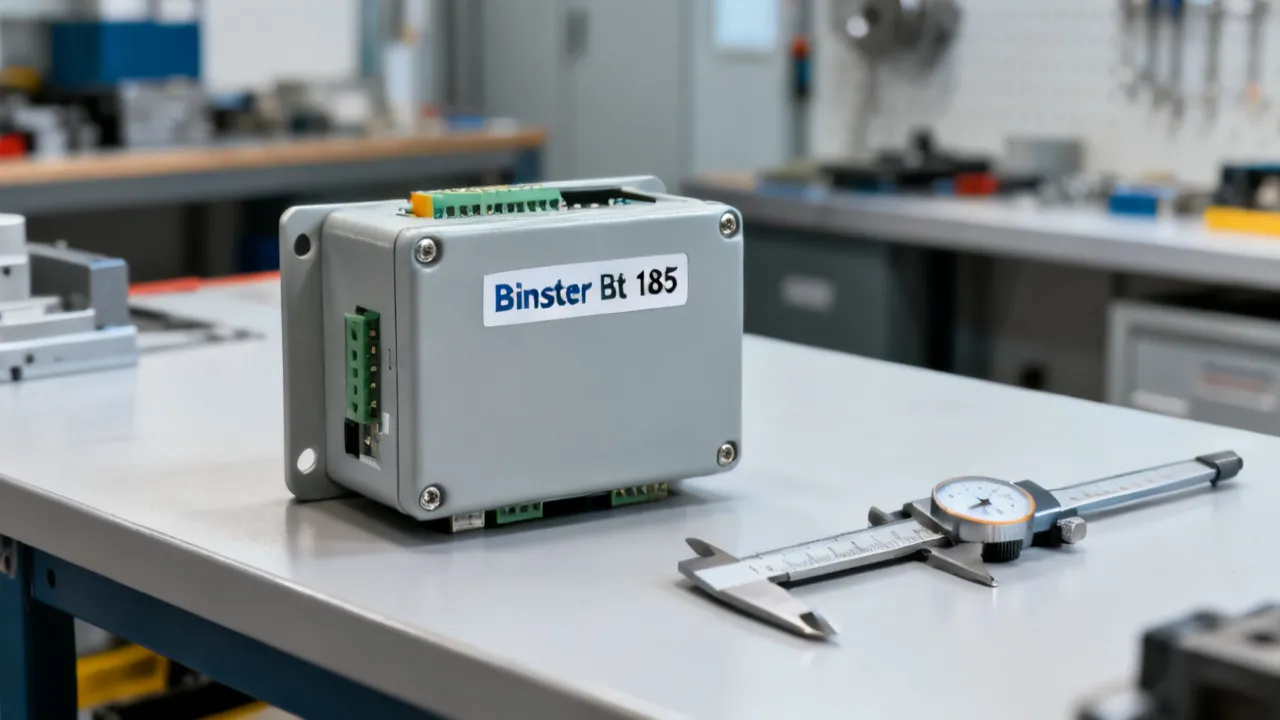
Binster BT 185 Overview: Features, Sourcing, and Fit
Binster Bt 185 is a technical-grade solution often evaluated by buyers for performance, integration, and good usability. This guide explains the product concept objectively, outlines typical supplier and sourcing considerations, and presents practical requirements for comparison—so you can assess Binster Bt 185 for your application with disciplined, verifiable decision criteria.
Binster BT 185: Technical Overview and Procurement Guide
Binster BT 185 is discussed here with a procurement-focused lens—what it typically is, how to compare options, and which checks matter before purchase. Objectively, “BT 185” is commonly used as a model identifier in industrial product ecosystems, where specifications, compatibility, and sourcing terms shape total value and safe use.
